Steps to find a refreshing Religion

Dec 10, 2009

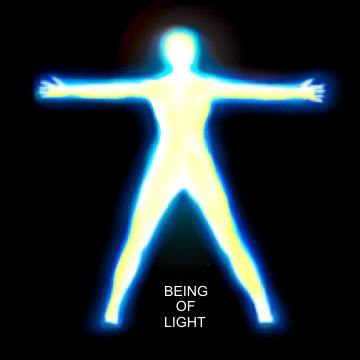
It is our light, not our darkness, that most frightens us!


"Our deepest fear is not that we are inadequate. Our deepest fear is that we are powerful beyond measure. It is our light, not our darkness, that most frightens us. We ask ourselves, who am I to be brilliant, gorgeous, talented and fabulous?
Actually, who are we not to be? You are a child of God- your playing small doesn't serve the world. There is nothing enlightened about shrinking so that other people will not feel insecure around you. We were born to make manifest the glory of God that is within us. It is not just in some of us, it is in everyone.
And as we let our own light shine, we unconsciously give people permission to do the same. As we are liberated from our own fear, our presence automatically liberates others."
Marianne Williamson


Dec 9, 2009

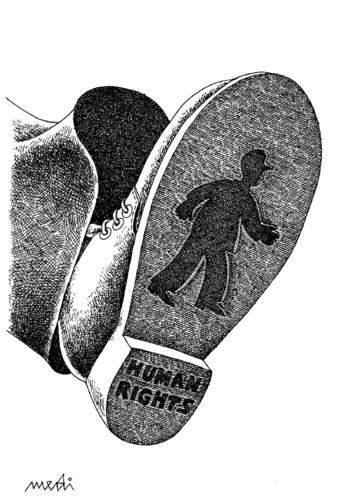
Human Rights Day in Germany puts spotlight on Iran.


Human Rights Day in Germany puts spotlight on Iran

LANGENHAIN, Germany, 9 December (BWNS) – Youth from a drama troupe joined with local dignitaries this week to address themes of exclusion and prejudice as they commemorated Human Rights Day with the Baha'i community of Germany.

The program took place at the National Baha'i Center on the grounds of the European Baha'i House of Worship, with more than 200 people in attendance.

The performance by the People's Theater, a youth project in the city of Offenbach, took a look at relationships between native Germans and immigrants, while other parts of the program focused on the situation of the Baha'is in Iran, especially a group of some 50 young people in Shiraz who are being punished for organizing activities for underprivileged children. Three of the Shiraz group are serving four-year prison sentences.
http://www.peoplestheater.de/

"I find it deeply shocking that the Baha'i youth in Shiraz engage in social activities in the same way as we do in Offenbach, but with one difference – whereas here in Germany our efforts are rewarded with prizes, the Baha'i youth in Shiraz must pay for their services to Iranian society with prison sentences and other coercive measures," said Peggy Habermann, coordinator of the People's Theater.


Kamal Sido, head of the Near East division of the Society for Threatened Peoples, attended the gathering and offered words of support for those persecuted in Iran.

The chairwoman of the Green Party in the German Federal State of Hesse, Kordula Schulze-Asche, expressed indignation over the human rights violations perpetrated in Iran, as did Gisela Stang, mayor of Hofheim, which encompasses Langenhain.

Messages were read from two members of the German Federal Parliament, Erika Steinbach of the Christian Democratic Union and Omid Nouripour of the Green Party.

Ingo Hofmann, representing the Baha'i community of Germany, presented an overview of the current situation of the Baha'is in Iran. In Shiraz, he said, Haleh Rouhi, Raha Sabet, and Sasan Taqva, had organized, with permission from authorities, an educational program for underprivileged children. They were later accused of having propagated the Baha'i Faith, even though a report commissioned by the government concluded that their activities were strictly humanitarian. The three were sentenced to prison terms.

Before performing "Souls of Shiraz," a piece composed for the occasion, musician Anke Keitel spoke of the invisible ties she feels with those imprisoned in Iran.

"Haleh, Raha, and Sasan believe just like me in the universality of human rights. They strive to foster the well-being of humanity, just as I do. And they are just as young as I am," she said.

Human Rights Day is celebrated annually around the world and marks the anniversary of the adoption – on 10 December 1948 – by the United Nations General Assembly of the Universal Declaration on Human Rights.


To read the article with photographs, go to:
http://news.bahai.org/story/740

For the Baha’i World News Service home page, go to:
http://news.bahai.org


Far away there in the sunshine are my highest aspirations. I may not reach them but I can look up and see their beauty, believe in them, and try to follow them. Hope sees the invisible, feels the intangible and achieves the impossible.


Anke Keitel, before performing her song “Souls of Shiraz,” composed especially for the Human Rights program, musician Anke Keitel explains the ties she feels with the young people of Iran.

http://www.myspace.com/ankekeitel

Over 200 people attended the Human Rights Day program at the Baha'i National Center in Germany on 6 December 2009. The building is near the European Baha’i House of Worship.


“The Baha'i House of Worship is itself an architectural monument to human rights, since different religions come into contact here,” she said.


Jul 25, 2009

Can you love your enemies?


Video:


Love Your Enemies from Kristen Miller on Vimeo.


O Lord, grant us to love Thee: grant that we may love those that love Thee; grant that we may do the deeds that win Thy love.

(Islam: Muhhamad)


Hatres is not conlquered by hatres at any time, but hatred is won by love: this is an eternal truth

(Hinduism: Gautama Buddha)


“I say this to you who are listening. Love your enemies, do good to those who hate you, bless those who curse you, pray for those who treat you badly. To the man who slaps you on one cheek, present the other cheek too….Love your enemies. ”
(Christianity: Luke 6:27-29)


If others hurl their darts against you, offer them milk and honey in return; if they poison your lives, sweeten their souls; if they injure you, teach them how to be comforted; if they inflict a wound upon you, be a balm to their sores; if they sting you, hold to their lips a refreshing cup.

(Baha’i Faith: Selections from the Writings of `Abdu'l-Baha, Page 24)


“All [human] creatures are God’s children, and those dearest to God are those who treat His children kindly.”

(Islam: Hadith of Baihaqi)


The good deed and the evil deed are not alike. Repel the evil deed with one which is better, then lo!, he between whom and you there was enmity shall become as though he were a bosom friend!

(Islam: Koran 41.34)


Better [is] a dinner of herbs where love is, than a stalled ox and hatred therewith.

(Judaism: Proverbs 17.9)


Conquer anger by love. Conquer evil by good. Conquer the stingy by giving. Conquer the liar by truth.

(Buddhism: Dhammapada 223)


Thou shalt not avenge, nor bear any grudge against the children of thy people, but thou shalt love thy neighbor as thyself: I [am] the LORD.

(Judaism: Leviticus 19.18)

Jun 15, 2009

Religion helps fight AIDS/HIV


Strategies to prevent the spread of HIV/AIDS among young people could be more effective if they tapped into the power of religious belief and practice.

That is the finding of researchers who studied the knowledge and attitudes of young people in relation to HIV/AIDS and sexual behavior.

The study, sponsored by UNICEF and conducted by the Varqa Foundation here, found that young people who knew and followed the teaching of their religion were much less likely to have engaged in sexual intercourse than those who did not, by a rate of 18 percent to 45 percent respectively.

"Prevention strategies for the spread of HIV/AIDS should harness religious belief and practice, especially in societies such as Guyana where religious affiliation remains strong," wrote the study's authors in an article published in the March 2007 issue of the International Journal of STD and AIDS.

Guyana has the third highest prevalence of HIV/AIDS in the Caribbean, which is the second-most afflicted region in the world.

"Many specialists working in international development are somewhat uncomfortable with faith-based efforts at personal and community transformation -- such as to prevent HIV-AIDS," said Brian O'Toole, the lead author in the study, in an interview.

"But this study suggests that in a country like Guyana, where many people have strong faith-based beliefs, it might be possible to draw on spiritual inspiration to address some of the problems facing society," said Dr. O'Toole, who is also director of the Varqa Foundation, which is a Baha'i-inspired social and economic development agency based in Guyana.


Other authors included Roy McConkey, a professor in the health promotion group at the Institute of Nursing Research at the University of Ulster; Karen Casson, also of the University of Ulster; Debbie Goetz-Goldberg, a researcher with Health for Humanity, another Baha'i-inspired agency; and Arash Yazdani, a youth volunteer.

More than 2,000 people aged 12-20 were surveyed for the study. They completed anonymous, self-reporting questionnaires about sexual behavior, their understanding of HIV/AIDs and the way it spreads, and attitudes towards issues like virginity and condom use.

Ninety-five percent of respondents were aware that HIV could be contracted from sexual contact with someone who was HIV positive. However, less than a third (29.5 percent) were able to state up to three other ways that HIV could spread and only 37 percent were able to name three ways of self-protection.

The survey also found that in Guyana, nearly 25 percent of young people aged 12-14 were sexually active, a percentage that rose to more than 33 percent for those 15 and older. Nearly half of the males over the age of 15 were sexually active, according to the survey.

Respondents were asked if they were aware of their religion's teaching on sexual matters and whether they followed it. Just over 35 percent of the young people said they did, with another 22 percent knowing the teaching but not following it.

The authors also concluded that peer education should be another element in any strategy of HIV/AIDS prevention.

"The content and delivery of educational inputs must be capable of being adapted to local contexts preferably by persons who are very familiar with those situations," wrote the authors. "In this respect, peer education would appear to offer some promise."

Dr. O'Toole noted that the study was carried out by a network of young people who themselves had been inspired by a faith-based, peer-education leadership training program known as Youth Can Move the World (YCMTW), also sponsored by the Varqa Foundation.

"Usually in this type of survey you get a couple of hundred responses," said Dr. O'Toole. "We were able to get several thousand because of the network of young people established by the Youth Can Move the World project."

Founded by Varqa in 1997, the YCMTW program has used peer education methods to train more than 7,000 Guyanese young people in strategies to prevent alcohol and drug abuse, suicide, HIV/AIDS, and domestic violence.

Among other things, the program uses inspirational passages from the holy writings of the major religions in Guyana to help young people draw on their spiritual heritage in an effort to prevent risky behavior. In Guyana, about 50 percent of the population is Christian, 35 percent is Hindu, 10 percent is Muslim. The remaining five percent of the people belong to other religions, including the Baha'i Faith.


(http://news.bahai.org/story/520)

--
Best regards
Husseim Stuck C.

Jun 7, 2009

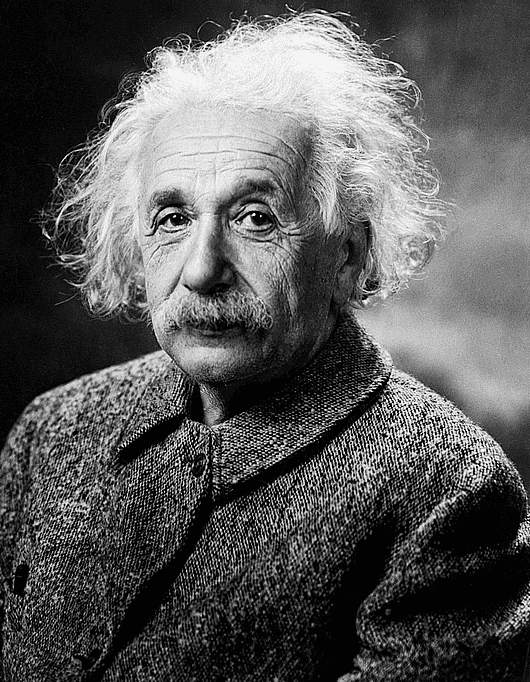
Alber Einstein proofs the unability of Evil to exist


In English:
A university professor challenged his students with this question.
"Did God create everything that exists? A student bravely
replied, "Yes, He did!" "God created everything?" the professor
asked. "Yes, sir," the student replied.

The professor answered, "If God created everything, then God created
evil, since evil exists. And according to the principal that our
works Define who we are, then God is evil." The student became quiet
before such an answer.

The professor was quite pleased with himself, and boasted to the
students that he had proven once more that the faith in God is a
myth.

Another student raised his hand and said, "Can I ask you a question,
professor?" "Of course," replied the professor. The student stood up
and asked,"Professor, does cold exist?"

"What kind of question is this? Of course it exists. Have you never
been cold?" The students snickered at the young man's question.
The young man replied, "In fact, sir, cold does not exist. According
to the laws of physics, what we consider cold is, in reality, the
absence of heat. Everybody or object is susceptible to study when it
has or transmits energy. Absolute zero (-460 degrees F) is the total
absence of heat. All matter becomes inert and incapable of reaction
at that temperature. Cold does not exist. We have created this word
to describe how we feel if we have no heat."

The student continued. "Professor, does darkness exist?" The
professor responded,"Of course it does." The student replied, "Once
again you are wrong, sir. Darkness does not exist either. Darkness
is, in reality, the absence of light. We can study light, but not
darkness. In fact, we can use Newton's prism to break white light
into many colors and study the various wave lengths of each color.
You cannot measure darkness. A simple ray of light can break
into a world of darkness and illuminate it. How can you know how
dark a certain space is? You measure the amount of light present.
Isn't this correct? Darkness is a term used by man to describe what
happens when there is no light present."

Finally, the young man asked the professor, "Sir, does evil exist?"
Now uncertain, the professor responded, "Of course, as I have
already said. We see it everyday. It is in the daily example of
man's inhumanity to man. It is in the multitude of crime and
violence everywhere in the world. These manifestations are nothing
else but evil."

To this the student replied, "Evil does not exist, sir, or at least
it does not exist unto itself. Evil is simply the absence of God. It
is just like darkness and cold -- a word that man has created to
describe the absence of God. God did not create evil. Evil is not
like faith, or love, that exist just as does light and heat. Evil is
the result of what happens when man does not have God's love present
in his heart. It's like the cold that comes when there is no heat,
or the darkness that comes when there is no light."


The professor sat down. The young student's name -- Albert Einstein.


Mar 5, 2009

Friedens Appell ; Es rühme sich nicht, wer sein Vaterland liebt, sondern wer die ganze Welt liebt.


Friedens Appell


„Es rühme sich nicht, wer sein Vaterland liebt, sondern wer die ganze Welt liebt. Die Erde ist nur ein Land, und alle Menschen sind seine Bürger.“


Durch den vierjährigen Besuch der Internationalen Bahá’í Schule Townshend, wo ich die

Bahá’í Religion kennen gelernt habe und durch den täglichen Kontakt mit anderen Bahá’í aus verschiedenen Ländern der Welt (und wo ich mich an meinem 19 jährigen Geburtstag als Bahá’í erklärt habe), ist mir bewusst geworden, dass alle Menschen zwar verschieden in ihren Eigenschaften sind, aber alle von demselben Gott stammen. Nur weil jemand eine andere Sprache spricht, eine andere Hautfarbe oder eine andere Religion hat, macht es ihn nicht schlechter oder besser als andere. Daher finde ich das Konzept “Vaterland” auch unsinnig oder falsch. Wieso sollte ich die Mitglieder eines Landes mehr lieben als die anderer Länder?


Vielmehr als Bahá’í sehe ich die Erde als ein Land und die gesamte Menschheit als ihre Bürger. Meine Überzeugung ist, dass alle Menschen den Auftrag haben, in Einigkeit, Frieden und Gerechtigkeit miteinander leben zu lernen. Dieser Lernprozess ist gerade in unserer Zeit sehr wichtig in den zwischenmenschlichen Beziehungen wie in den Beziehungen zwischen Ländern oder Nationen. Ich glaube auch das Leben ist ein Geschenk Gottes und ich habe nicht das Recht, das Leben eines anderen zu nehmen. Alle meine Freunde und Verwandte kommen aus verschiedenen Nationen, gegen sie womöglich in einer kämpferischen Auseinandersetzung zu sein und jemand aus deren Nation zu töten scheint mir unvorstellbar und völlig unsinnig. Es würde in mir tiefe Gewissenskonflikte auslösen und ich möchte keine solche Schuld auf mich laden und meine Seele nicht mit der Tötung anderer Menschen belasten.


Für mich hat das Gebot des Nicht Tötens nicht nur eine religiöse Rechtfertigung sondern auch eine ethische. Ich bin zur der Erkenntnis gekommen, dass ich überhaupt nicht in der Lage wäre, jemanden zu töten. Schon als Kind habe ich nie versucht, Konfliktsituationen mit Gewalt zu lösen und ich bin daher nicht interessiert, das in Zukunft zu tun.

Selbst Albert Einstein hat schon gesagt ‘Nichts wird Kriege abschaffen, wenn nicht die Menschen selbst den Kriegsdienst verweigern”. Es muss also eine völlig andere Geisteshaltung in den Menschen existieren, damit Weltfrieden herrscht und mein Beitrag zu diesem Weltfrieden ist, dass ich den Dienst mit der Waffe verweigere.


Überhaupt habe ich große Zweifel, dass ein Krieg das geeignete Mittel in einer Konfliktsituation ist. Nehmen wir als Beispiel nur mal den Irak-Krieg. Es wurde der Öffentlichkeit erzählt, dass der Grund des Angriffs auf Irak der sei, dass Irak der “Drahtzieher” der Terroristenangriffe sei und außerdem Atomwaffen besitze. Keine von beiden Anschuldigungen hat sich als die Wahrheit herausgestellt. Die Öffentlichkeit wurde also belogen (manipuliert) und die wirklichen Interessen waren andere (wahrscheinlich wirtschaftlicher Natur). Meine feste Überzeugung ist, dass ein Krieg niemals die Lösung von Konfliktsituationen sein kann. Auch wenn im äußersten Verteidigungsfall der Einsatz von Waffen vertretbar sein kann, möchte ich persönlich niemals eine Waffe auf einen anderen Menschen richten und das aus meiner religiösen und ethischen Überzeugung. Ich verweigere daher den Dienst mit der Waffe, aber ich bin gerne bereit stattdessen einen Zivildienst zu leisten.


In meinem Leben möchte ich einen konstruktiven Beitrag zum Wohlergehen der Menschen leisten. Als Bahá’í bin ich verpflichtet, ein Jahr meines Lebens in den Dienst der Gesellschaft zu stellen, daher habe ich mich für 12 Monate bei Peoples Theater in Offenbach verpflichtet. Das ist eine Organisation, die mittels Theatervorführungen durch darstellende Tänze soziale Probleme (z.B. Drogen, Gewalt und Vorurteile) vor Augen führt und versucht die Gesellschaft davor zu warnen und zu erziehen, dass Probleme auch anders gelöst werden können, durch respektvolle Auseinandersetzung mit der Meinung anderer, durch Beratung und nicht durch Gewalt.

Obwohl ich nie in Deutschland gelebt habe, habe ich dennoch eine enge Beziehung zu diesem Land. (Hier wurde mein Vater geboren, hier leben meine Grosseltern, ich selbst habe Deutschland durch viele Besuche in meiner Kindheit kennen gelernt.) Ich finde es positiv, dass die Menschen hier Frieden wollen und nicht an kriegerischen Auseinandersetzungen interessiert sind. Nach meiner Zeit bei Peoples Theater möchte ich ein Studium in Deutschland anfangen, wahrscheinlich im ökologischen Bereich.


Ich bedanke mich für die Zeit, die Sie sich genommen haben um meine Ausführungen zu lesen und ich hoffe, dass meine vielseitigen Gründe verständlich, schlüssig und auch in Ihren Augen ausreichend sind, um mich als Kriegsdienstverweigerer anzuerkennen.


Mit freundlichen Grüßen


„Es rühme sich nicht, wer sein Vaterland liebt, sondern wer die ganze Welt liebt. Die Erde ist nur ein Land, und alle Menschen sind seine Bürger.“

Feb 22, 2009

Letter from a Daughte to her loving Father being prossecuted for his Religious belefs in Iran


Baha’i Faith Leaders on Trial in Iran

Baha'i Leaders in Iran

''The Islamic Republic of Iran has announced it will put seven Baha’i leaders (right) on trial. The deputy prosecutor in Tehran stated on February 11 that the seven were charged with “espionage for Israel, insulting religious sanctities, and propaganda against the Islamic Republic.”

The Baha’i leaders have been in Evin Prison in Tehran since Spring 2008.

Mrs. Shirin Ebadi, the Nobel Laureate, is their lawyer. She has not been allowed to meet with them or to review their files.

Iran also continues to deny basic human rights to millions of its other citizens … students, women, journalists, bloggers, and other religious minorities, Christians, Jews, and Sufis.

For the largest religious minority in Iran - the Baha’is - the situation in Iran has turned dangerous with these trumped-up charges against leaders of the Baha’i Faith and increased persecution of the rest of the 300,000 Baha’is throughout Iran - solely because of their religion. ''

Content from:
(http://www.speakout4bahais.net/2009/02/21/bahai-faith-leaders-on-trial-in-iran/)


''But the Light of Truth is not easily extinguished. The very water that is poured on this fire to put out its flame turns into oil, and the fire burns with more intensity. Nothing can be done to stop Bahá’u’lláh’s growing influence. The farther the authorities banished Him, the greater the number of people who were attracted to His Teach­ings and recognized His Power and Majesty. In spite of constant persecution''


Here is a letter from February 18, 2009, from Naeim Tavakoli's (the daugter of one of the inprissoned Bahai's) :


- 1 -
I would like to share a few words about my
personal experience and feelings on the
current situation of Baha'is in Iran: about my
family, my friends and myself. What I am
going to share are my feelings and thoughts, and the complications which I face
everyday: as an Iranian; as a Baha'i; as a member
of the human family; and as a person
whose father is incarcerated in one of the most
infamous prisons in the world. The Evin
prison, in north of Tehran. High on a hill. With
underground cells and torture rooms.
Surrounded by thick huge walls.
I remember the time I was involved in a hi-rise
construction project which had a good
view of Evin prison. As the building was going
up, higher and higher, I was able to have
a better view of that scary place. That is why today I can clearly remember the
asymmetrical outline of Evin. It is the image I
go to sleep with at night and wake up with
in the morning, trying to picture my father in it. I know what it looks like.
Three years ago, my father, Behrouz Tavakkoli,
was in jail on a previous occasion for his
Baha'i beliefs. When we finally received
permission to visit him I couldn't believe the
man before me was my father. Pale, weak with a
long beard and long hair, in a loose
prison uniform. As they took him away I saw he
was limping. Now I can imagine what it
looks like. But this time I have to add to this
picture all I can remember from his friends,
too. I have to use my imagination like Photoshop
software to add beards to the smiling
faces of the other four men. I have to make them
look older. Make them look older by
several years older for each month which they
have spent in prison. I have to picture
their joyful eyes as tired. Tired of repeated
daylong intense interrogations under high
intensity light sources. I have to imagine how my
father and his friends look today after
nine months of devastating interrogations
accompanied by the most humiliating and
insulting words they've ever heard in their
lives. Do you know two of these seven
arrested Baha'is are women? I can't imagine these
two women in that situation. This is
what they call "white torture". Words are loosing
their meanings and implications. Upon
hearing the word "White" it is no longer the snow
that comes to my mind, nor is it a dove
or peace. Torture comes to my mind these days
with the word "white". White torture
means all the serious orthotic problems my father has developed during the
incarceration period. White torture means that
Vahid, one of my father's colleagues, who
is 35 years old, is loosing his eye sight due to
severe nerve breaking pressure. White
- 2 -
torture means to deprive a mother from being with
her teenage daughter for several
months.
I have only a few minutes to share with you a few
words about my father, and his friends
but this is more or less the everyday life of the
largest non-Muslim religious minority in
Iran. This is the life of anyone who belongs to
the Baha'i community, a community of
over 300,000. A community deprived of everything.
Deprived of basic human rights from
the time of their birth until they die. Deprived
of being given – while still a newborn - any
name which holds significance to the Baha'is.
Deprived of having even one easy day in
school without being singled out. Deprived of
being able to register in any school based
solely on their talents. Deprived of higher
education. Deprived of marriage certification.
Deprived of not only governmental jobs, but even
banned from being hired by a large
part of the private sector due to government
pressures. Deprived of having their own
businesses without their names published in the
revolutionary guard's black list.
Deprived of having a tombstone on their graves,
to rest in peace without shaking several
times a year in their caskets from the bulldozers
of the Islamic Republic. Deprived of
having Baha'i administrative elections and institutions.
My father and his friends were seven members of
this populous community which is
scattered over every corner of Iran. Their job
was only to bring these people together. To
provide them with sense of community and integrity in the absence of any Baha'i
institutions, which are banned by law in the
Islamic Republic of Iran. Now they have
been targeted by several false and fabricated accusations by the regime.
I remember nine months ago after that morning
raid to my parent's home, I was talking
to my mother and I could feel she was shaking on
the other side of the line as she was
telling me about her conversation with one of the
intelligence agents. She was packing a
warm sweater for my father as they were taking
him away, but the agent refused to allow
my father to take that package, saying "he is not
going to need clothing anymore, only a
live person does"!
Now it has been over nine months that my father
is in jail. It has been over nine months I
am working on that picture in my head, imagining
my father's situation. Once I had to
paint him in a solitary confinement, and in
interrogation rooms. I've tried to picture him in
- 3 -
a room sitting on a wooden stool for over 20
hours facing two intelligence agents filled
with blind religious prejudices. I have moved my
father in this picture from solitary
confinement to the general ward. Then I moved him
back to a small cell with no bed, not
enough blankets, sleeping on a cold cement floor
in Tehran's cold winter with his four
fellow cell-mates. Now I am working on another
corner of this big mental canvas. I am
drawing a court. I cannot see a lawyer though.
Probably they don't have access to their
lawyers.
Will I have to draw my father and his friends
back into the prison after this court case?
Will I have to move him around Evin prison in my
imaginary drawing one more time?
From solitary cells, to interrogation rooms, to
torture benches, to larger cells with his
friends with him.
When I look more carefully at this big unpleasant
picture there is another section in this
prison which I can see, with wooden posts or
steel posts. And steel rafters. And handoperated
cranes. And hoisting machines. And ropes!
My mind won't let me move my father and his friends to that corner.
Naeim Tavakkoli


18 months ago: In this image made from video provided by IRIB/IRRIN, Haleh Esfandiari, director of the Middle East program at the Woodrow Wilson International Center for Scholars, speaks to reporters after her release from the Evin prison in Tehran, Iran on Tuesday, Aug. 21, 2007l. The detained Iranian-American academic was suddenly released after spending months behind bars on charges of endangering Iranian national security - allegations her family vehemently denies.


source
( http://images.google.de/imgres?imgurl=http://cache.daylife.com/imageserve/05IZgTH3wF286/610x.jpg&imgrefurl=http://www.daylife.com/photo/05IZgTH3wF286&usg=__ppj5rC2L383pNSK8VAieac_Nw9s=&h=452&w=610&sz=45&hl=de&start=53&um=1&tbnid=OJXY-aa-cGo3qM:&tbnh=101&tbnw=136&prev=/images%3Fq%3Devin%2Bteheran%2Bprison%26start%3D36%26ndsp%3D18%26um%3D1%26hl%3Dde%26client%3Dfirefox-a%26rls%3Dorg.mozilla:de:official%26hs%3DntU%26sa%3DN )


Hold on friends, your efforts will not be on Vain!
The promise from Baha''u'lla'h is with you! And all the Baha'is and friends of the Baha'is in the world appreciate your sufferings and sacrifices with reflecting outmost patience, love, dignity, and strenght, and strive day by day to spread the creative words of God.

Thank you ! for withstanding the stufferings and tormentations in this mortal world of dust. I pray so that your sufferings will be reduced and your life in the ethernal kingdom richer!

Alláh'u'Abhá


P.S. Here is a reportage of a wonderful soul.

Thank you Shirin Ebadi, for protecting the Baha'is with your own life.... spread this link !! http://iran.bahai.us/2009/02/19/channel-4-news-in-the-uk-interview-with-shrin-ebadi/